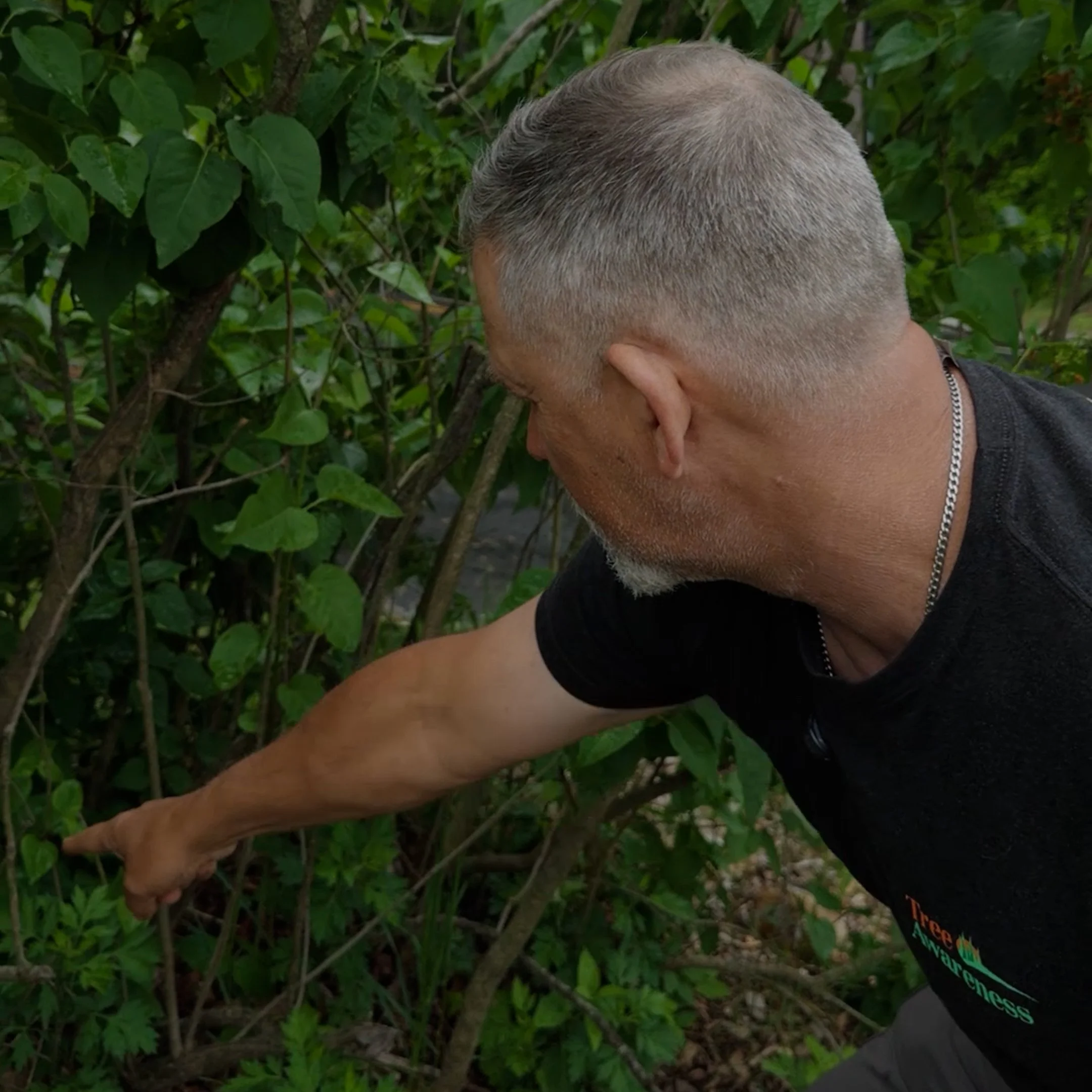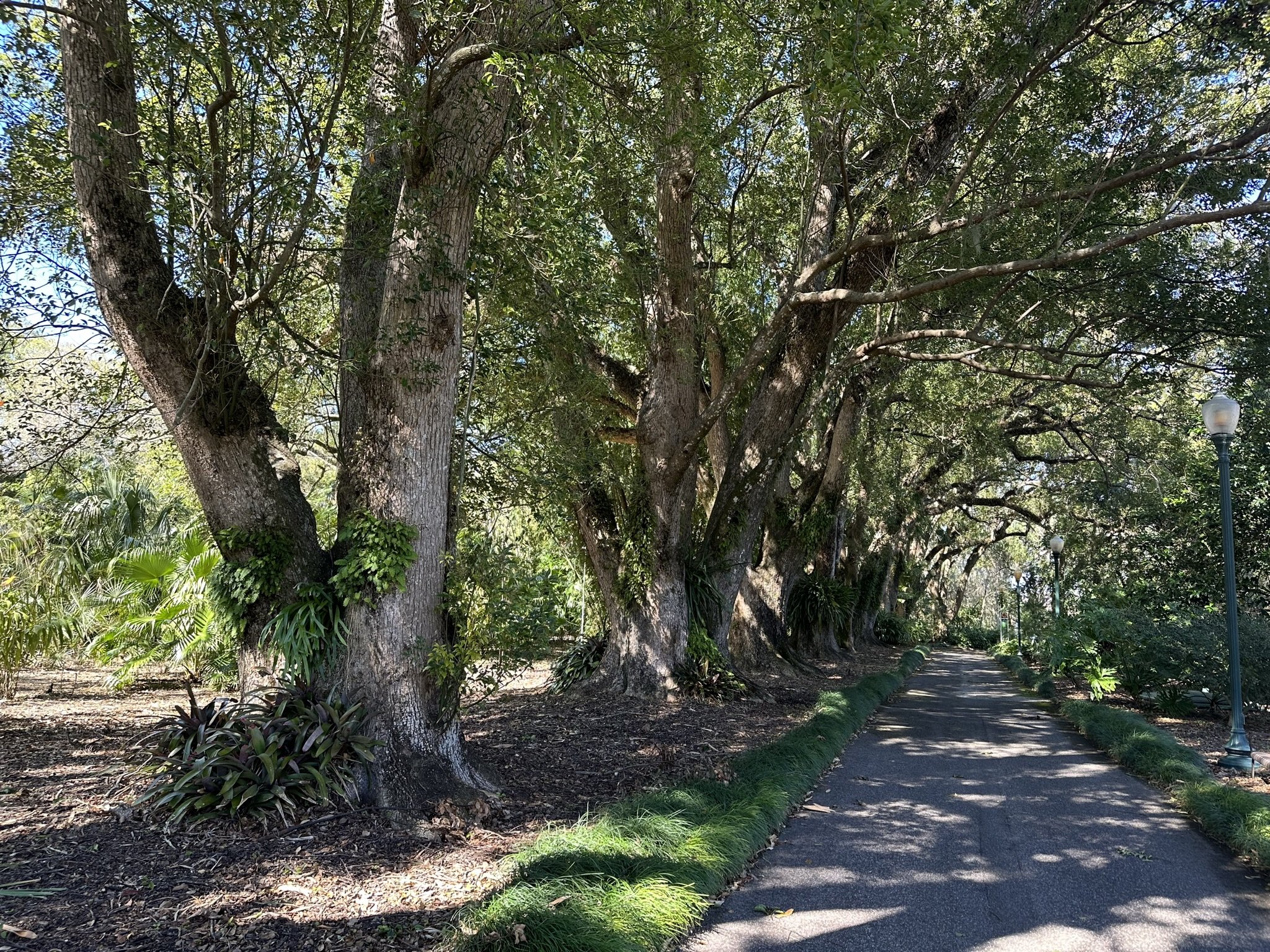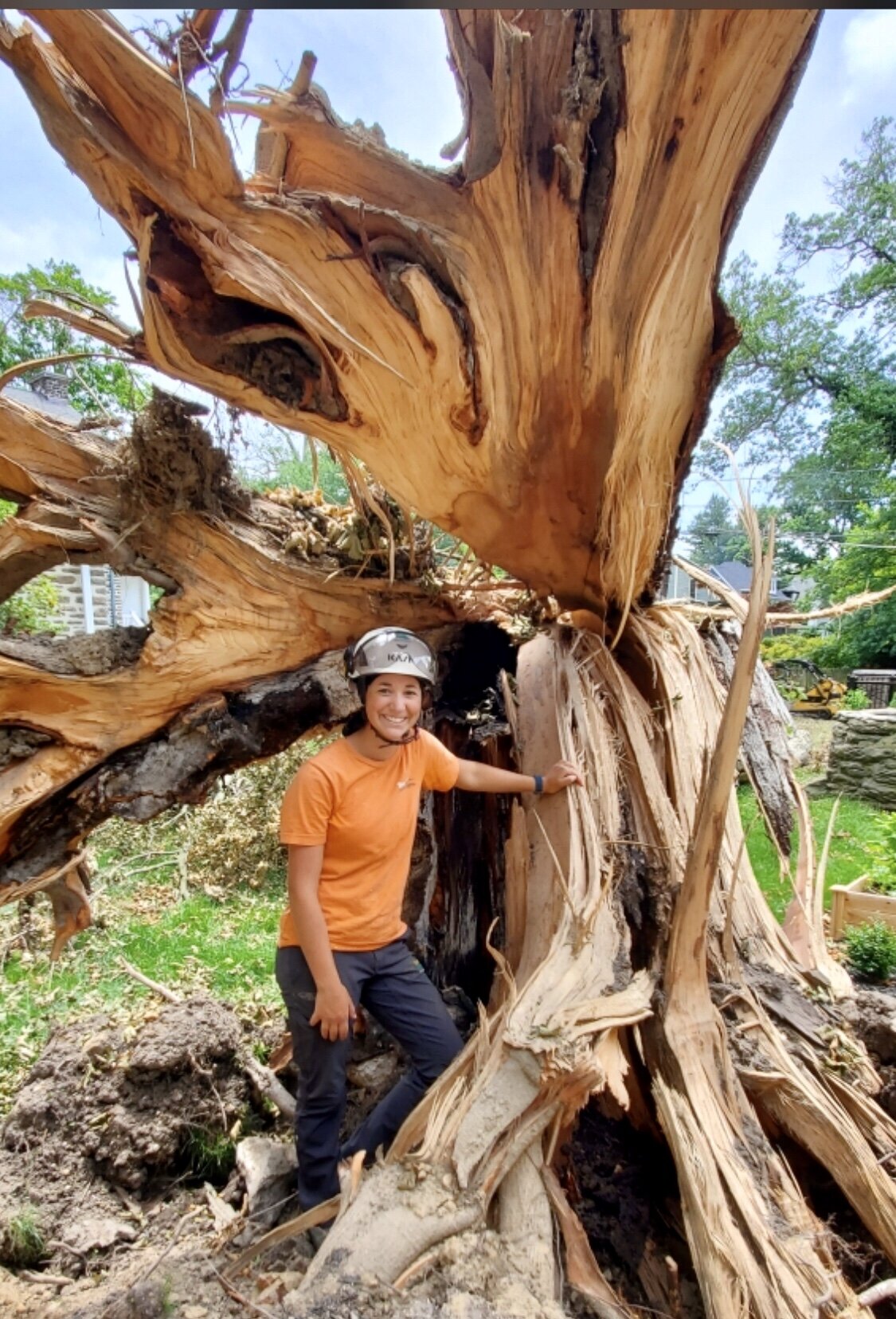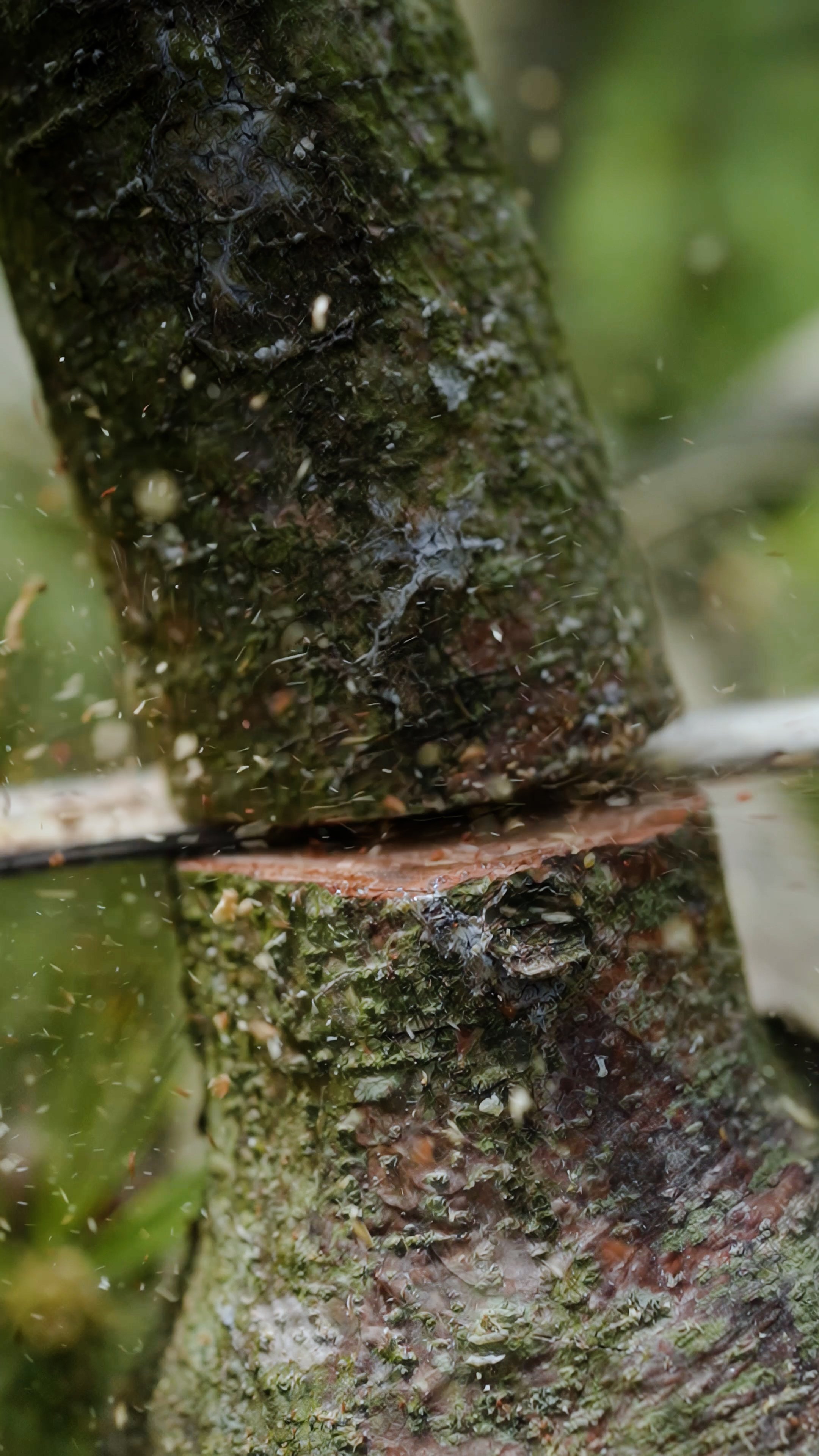
Tree Awareness is the best. Removal and cleanup are the best.

TRAQ Qualified · LTE #408 · Since 1993
Tree care in Pittsgrove Township done by people who climb, assess, and prune for a living — not a sales team. NJ LTE #408, TRAQ Qualified, ISA Member.
Pittsgrove Township is home to the Alliance Colony — a Jewish agricultural community founded in 1882 and one of the longest-lasting such settlements in the United States. The township also includes Rainbow Lake and Parvin Lake (within Parvin State Park area). Tree care here means agricultural-residential canopy, lake-edge trees, and farmstead windbreaks. Six signs Paul looks for first.
Splits running up or down the main trunk indicate structural failure has begun.
Healthy trees shed bark slowly. Large patches falling away in a single season point to internal decline.
Mushroom conks at the base or running up the trunk are evidence of structural decay.
New leans, or worsening leans — especially after a storm — mean the root plate may be compromised.
Lightning-struck trees often show crown dieback within 12–18 months.
If your ash tree’s upper canopy is 30%+ thinned, the tree is past treatment threshold.
See one of these on your property?
Free Site VisitSix honest comparisons across what actually matters when hiring a tree service in Pittsgrove Township, NJ.
Same-day response on emergencies, walk-throughs scheduled within one business day. The township is rural with agricultural and lake-area sections, and the same arborist walks every property.
Reach Paul directly at (856) 241-0489 or submit the form below. We respond within one business day — same day for emergencies.
< 1 business dayPaul personally inspects every tree, walks you through what he sees, and talks through options. No high-pressure sales.
30–45 min on siteYou get a written estimate in your inbox within 48 hours — with scope of work, timeline, and price. No surprise charges.
Within 48 hoursMost jobs scheduled within a week. Same-day for emergencies. Full cleanup. Documentation provided for property files.
1–7 days typicalReal questions from real property owners in Pittsgrove Township — about credentials, process, and the work we do.
Tree Awareness, Inc. operates under NJ Licensed Tree Expert #408 — held by Paul D. Biester since 1993. Our company is also TCIA-Accredited (industry-vetted business standard) and Paul holds the CTSP (Certified Treecare Safety Professional) credential. Most NJ tree services display a single license number. We hold the credentials triad — NJ LTE #408 + TCIA Accreditation + CTSP — with explicit verification.
Yes. Cabling and bracing extends the life of mature heritage trees by supporting compromised limbs and forked structures. We do this work, with TRAQ-qualified risk assessment determining when cabling is the right call versus removal. Particularly relevant on the area’s older heritage canopy.
Tree Awareness, Inc. is TCIA-Accredited — the Tree Care Industry Association’s business accreditation, which is more rigorous than BBB for tree service specifically. TCIA Accreditation requires documented safety standards, employee training records, and customer satisfaction history reviewed by industry peers. It’s a higher bar than BBB and rarely held by NJ tree services.
Tree Awareness, Inc. has operated across South Jersey since 1993 — over 30 years in business. The differentiator isn’t just years — it’s the credentials triad (NJ LTE + TCIA + CTSP) and the owner-on-every-job model. Paul has personally walked these properties for three decades.
Yes. Alliance — founded May 10, 1882 as a Jewish agricultural colony and one of the longest-lasting in the United States — has multi-generation specimen trees on legacy farm lots. The Moshe Bayuk House and surrounding heritage parcels carry preservation-grade canopy. Cabling, root-collar excavation, and conservative pruning before considering removal.
Yes. Properties bordering Parvin State Park — Rainbow Lake, Parvin Lake, and the surrounding hardwood forest — have unique tree-care considerations: state-park-adjacent setbacks, riparian-zone work, and forest-edge species mix. We coordinate with NJDEP State Park Service guidelines where applicable and document the work for property files.
Yes. We provide written arborist reports for agricultural-easement reviews, conservation-easement compliance, farm-property tree assessments, and equipment-traffic damage documentation. Reports accepted by NJ Ag Preservation, the SADC, municipal land-use boards, and insurers.
No other township in our service area carries this many distinct community names on this much rural land. From CDPs like Olivet to historic crossroads hamlets, every Pittsgrove address sits in one of these named places.
Census-designated place. Largest concentration in the township.
Site of Alliance Colony — a Jewish agricultural community founded May 10, 1882. Moshe Bayuk House survives.
Historic township-center settlement.
Village along the rural roads.
Historic settlement on the township map.
Working-rural community.
Lakeside community.
Adjacent to state-park lakeland.
Township locality.
Historic rail-stop hamlet.
Pittsgrove village.
Township-edge settlement.
Crossroads hamlet.
Working-farm community.
Northern township locality.
The Alliance hamlet carries genuinely unique heritage. Wikipedia describes it as “a Jewish agricultural community that was founded on May 10, 1882,” backed by the Hebrew Emigrant Aid Society and the Baron de Hirsch Fund. The Moshe Bayuk House — the last surviving structure of the colony — still stands. Trees on Alliance properties carry that 140-year continuous-use heritage.
Tree care on a working agricultural township is a different discipline than suburban yard work. We split Pittsgrove jobs into four categories — each one carrying its own diagnostic logic, pruning standards, and risk assessment frame.
The lines of trees and shrubs separating field from field, and field from road. Hedgerows here often include hawthorn, hackberry, sassafras, and volunteer cherry — mixed-species rows that need different pruning logic than ornamental hedges. Working hedgerows protect crops from wind, slow runoff, and provide pollinator habitat.
The big white oaks, sycamores, and tulip poplars that anchor old farmsteads — often shading houses, barns, and barnyard buildings together. Many of these specimens predate the surrounding crop fields by 80–150 years and need preservation-grade care: structural pruning, soil decompaction, risk assessment.
Single-species rows planted to slow prevailing winds across open fields. Eastern red cedar, white pine, and Norway spruce are common. Windbreak trees age into structural-failure conditions row by row — we plan replacement and pruning in linear cycles, not single-tree decisions.
The street trees that line the small grids of Centerton, Olivet, Alliance, Daretown, and the other hamlets. Smaller scale than suburban subdivisions, with mature oaks and maples planted alongside 19th-century buildings. Crossroads canopy is the visual fabric of these communities — we treat it as heritage canopy.
Three pressures specific to a working agricultural township — not the boilerplate suburban list.
Trees on open Pittsgrove farmsteads grow with full structural form — wide canopies, no neighboring trees to share wind load. They behave very differently from closely-spaced subdivision trees. Storm damage tends to fail at major branch unions rather than at the root flare. Risk assessment on open-grown specimens needs the right diagnostic frame.
Emerald ash borer has reached Salem County. Untreated white and green ash on township properties typically fails within 3–5 years of first canopy thinning. Field-edge ash, hedgerow ash, and farmstead ash are at every stage of this curve simultaneously. There are two paths: trunk-injection treatment if canopy loss is under 30%, or a removal timeline before structural failure.
Pittsgrove soils trend sandier than the clay-belt suburbs to the north. Lower nutrient retention, faster drainage, more drought stress on shallow-rooted species. Open exposure compounds it — specimen trees in fields take more sun and wind year-round than sheltered yard trees. Soil-aware care matters here.
Six services calibrated to working farmland, hedgerow inventory, hamlet streets, and the rural acreage between.

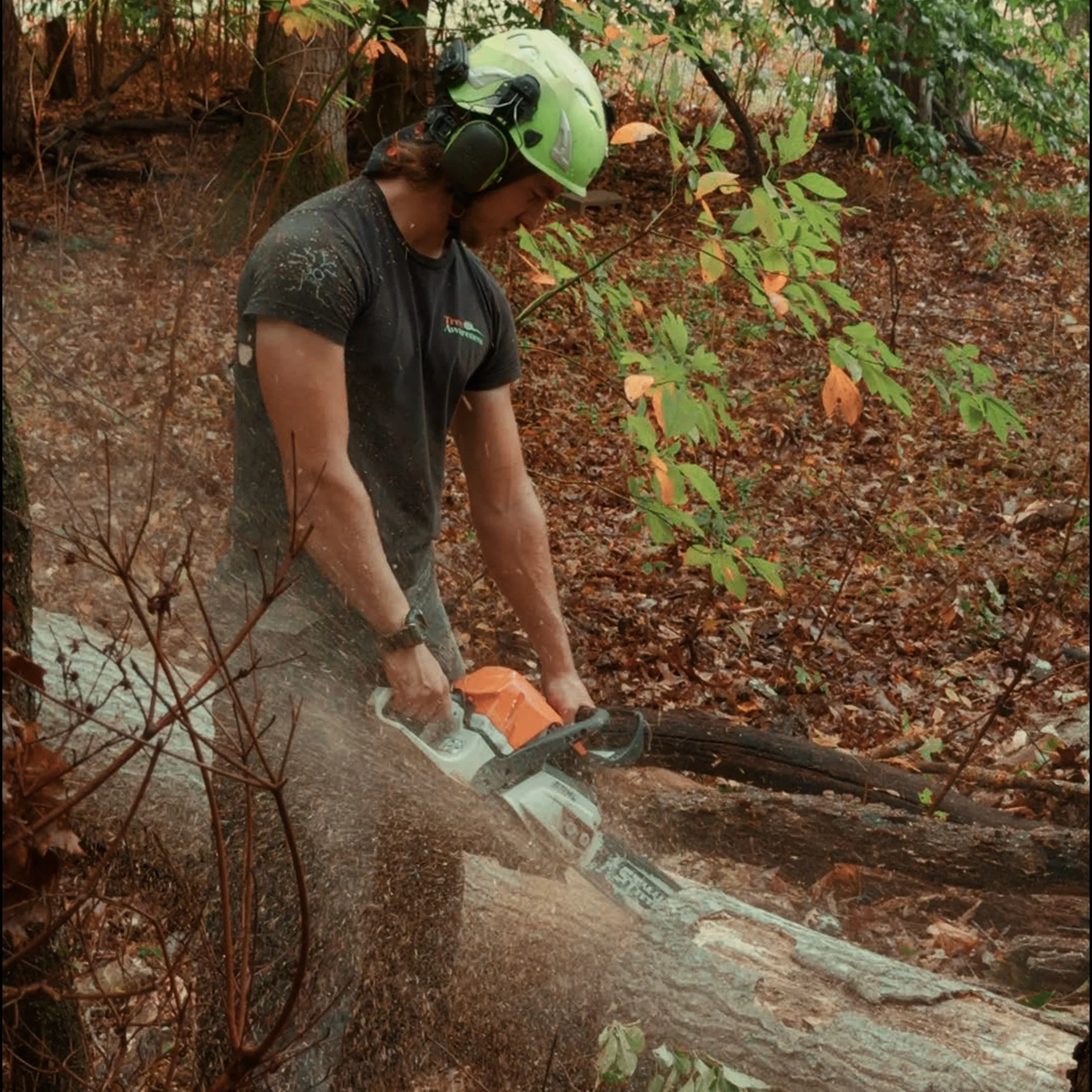
Need a tree removed on your Pittsgrove Township property? Around Parvin State Park and the township's rural ag lots we work mature hardwoods, hazard trees near farmhouses, and dead conifers along field edges. Crane if the situation calls for it, ropes and rigging if not. Lawn protected, full cleanup. Call (856) 241-0489 for an honest assessment from Paul.

Pittsgrove Township's heritage hardwood forest and farmhouse trees — old white oaks, hickories, sycamores — need careful structural pruning to last another generation. ANSI A300 standards, no topping, no flush cuts. Cabling and bracing where a heritage tree earns it. Call (856) 241-0489.

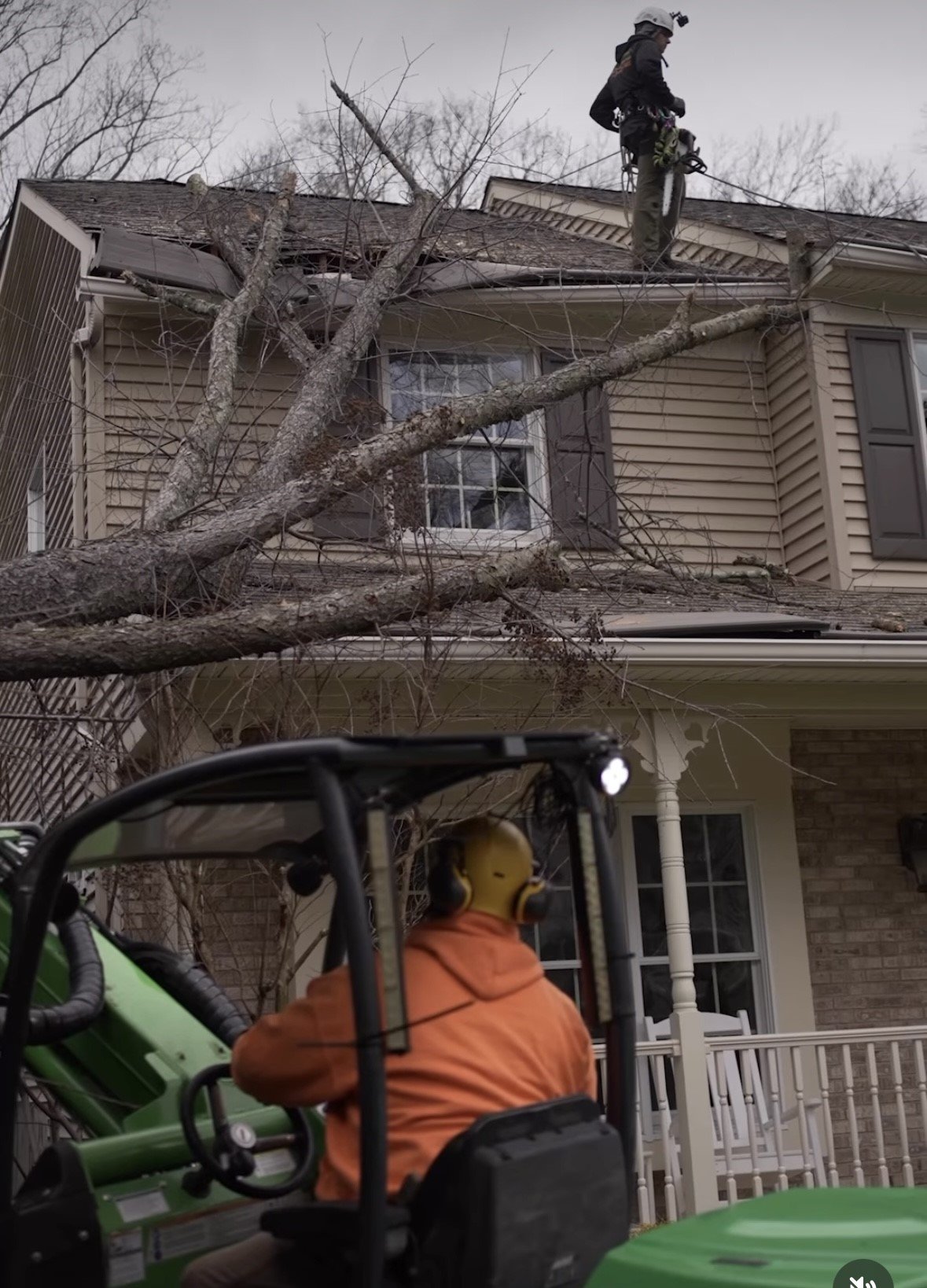
Storm down a tree on your Pittsgrove Township property? Our crew responds same-day for trees on the house, blocked rural roads, and trees on outbuildings. We document the site for your insurance claim. 24/7 — no after-hours premium. Call (856) 241-0489.

Heritage tree near the farmhouse or close to Parvin State Park you're worried about? Our TRAQ-qualified arborist walks the property and gives you a written, honest assessment. You get the truth about each tree — not a pitch for removals. Call (856) 241-0489 for a free walk-through with Paul.

Need a written arborist report for a Pittsgrove Township permit, an agricultural-easement review, an insurance claim, or a property-line dispute? Paul Biester (NJ Licensed Tree Expert #408) provides reports that municipalities, insurers, and courts accept. 30 years working Salem County properties. Call (856) 241-0489.

Is a tree on your Pittsgrove Township property losing leaves early, yellowing, or showing bark damage? We diagnose the actual problem before treating anything. Out here we commonly see Emerald Ash Borer on ash trees, Bacterial Leaf Scorch on oaks, and root issues on old forest-edge trees. We treat the cause. Call (856) 241-0489.
PITTSGROVE TOWNSHIP · CLIENTS
Verified Google reviews from real clients.
VIDEO REVIEW
Tree Awareness is the best. Removal and cleanup are the best.
— Phyllis Golt
Tree Awareness was the best. They were quick in their response and professional in their work. From the first call to the culmination of their service they were the best. Thank you Tree Awareness for economical and professional job well done.
— Elizabeth Laube
I had a mid-sized, black walnut tree in my backyard that was surrounded by other trees I wanted to make sure that the other trees weren't damaged during removal of the black walnut. Tree Awareness was very careful and did a lot of extra work to insure that none of the other trees were affected.by the tree removal. Great work!
— ted bobroski
This is the first time I have used Tree Awareness which was recommended by a neighbor. The team was extremely professional and their work was outstanding. I will definitely use this service again.
— Linda Blackwell
Paul and his team did a great job today! My tree looks great. They were quick and completely cleaned up everything. I would definitely recommend tree awareness! Thanks again Paul!
— Martha Baker
Excellent service. They know what they are doing and they are incredibly safe, contentious, and fair. I will not call anyone else ever again for tree work.
— Suzanne Zigo

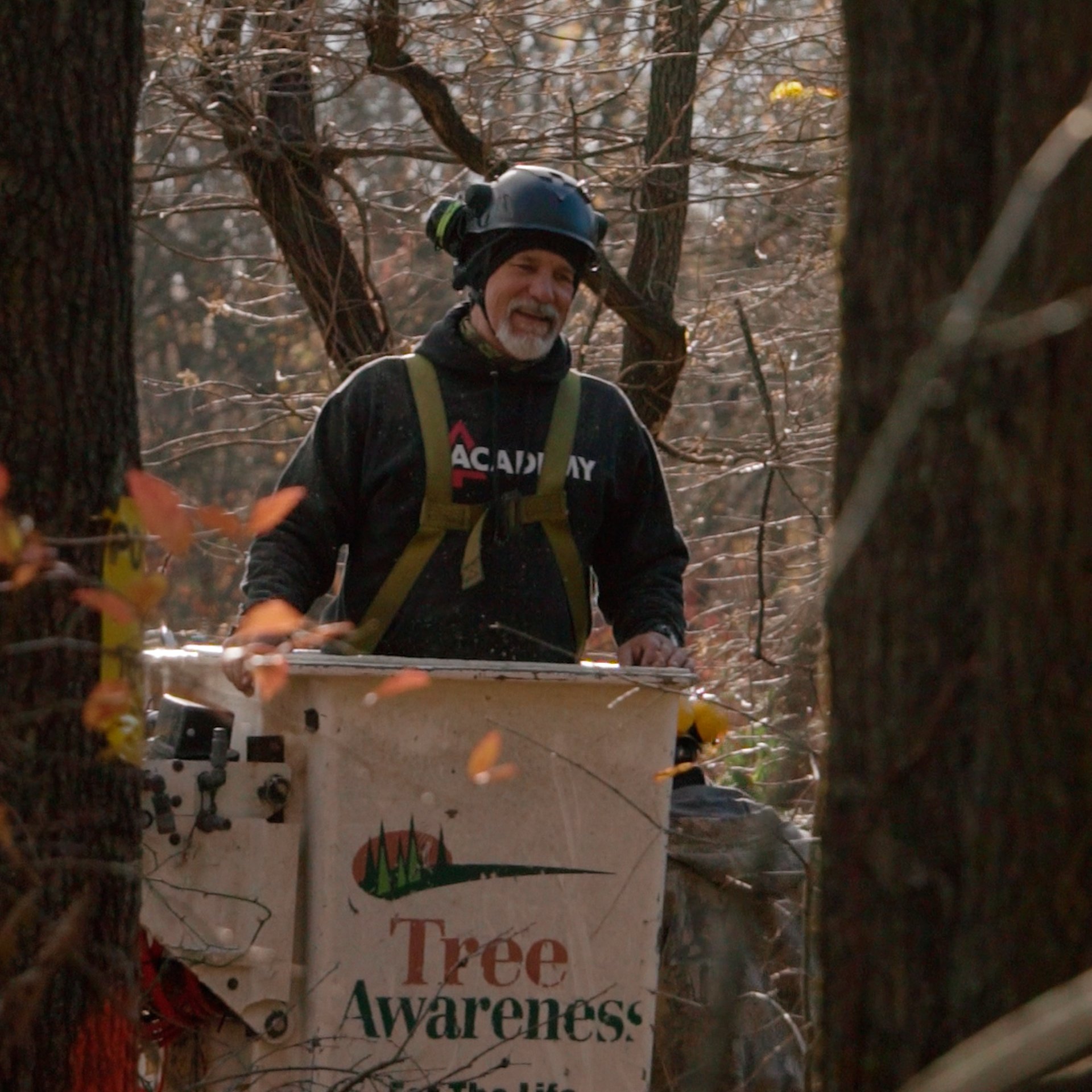
Three decades of South Jersey work means Paul has cared for farmstead specimens, hedgerow inventory, and hamlet street canopy across the agricultural belt. Every Pittsgrove quote starts with him on the property.
Tree Awareness, Inc. is owner-operated and TCIA-Accredited. We keep heritage and farmstead trees alive when the structure supports it, and remove decisively when it doesn’t.
From Olivet’s 1,297 residents to crossroads hamlets like Six Points and Union Grove. We cover the entire 45.75-square-mile township. ZIP: 08318.
Less invasive, more in harmony — that’s the work, whether it’s a single backyard or a whole block.
We work this section the way we work the rest of town — careful assessment first, then the right call for the tree.
Same standard here as everywhere else: understand the tree, keep what should stay, and when removal is the right call, do it well.
Less invasive, more in harmony — that’s the work, whether it’s a single backyard or a whole block.
We work this section the way we work the rest of town — careful assessment first, then the right call for the tree.
Specific answers for landowners on working farms, hedgerows, and hamlet lots.
Cost varies more here than in suburbs — an open farmstead removal with crane access is different than a hedgerow cleanup or a hamlet-lot job. Trunk size, equipment access on dirt roads, proximity to structures, and whether stump grinding and haul-out are included all drive pricing. Every Pittsgrove job gets a free written estimate.
Pittsgrove Township does not typically require a permit to remove a tree on private residential property. Properties with conservation easements, agricultural-preservation easements, or Pinelands-edge restrictions may face additional review. We help homeowners verify with the township before scheduling.
Yes. Hedgerows are a distinct discipline — mixed-species lines that protect crops from wind, slow runoff, and provide pollinator habitat. We manage them by cycle (3–5 year intervals depending on species mix) rather than by single-tree decisions.
Regularly. Farmstead specimens are heritage trees with full structural form. We treat them with preservation-grade care: structural pruning, soil decompaction, risk assessment, and written documentation for property files.
Yes. Eastern red cedar, white pine, and Norway spruce windbreaks age in linear cycles. We plan replacement and pruning in row-by-row stages, not as one-off tree decisions.
Yes — 24/7 emergency response. Rural access can be slower in remote sections, but we dispatch the same day for hazards. Call (856) 241-0489.
Yes. We diagnose canopy thinning on field-edge, hedgerow, and farmstead ash; evaluate whether trunk-injection treatment is still viable based on canopy loss; and implement a treatment schedule when appropriate. For trees past treatment threshold, we recommend and schedule removal.
Pittsgrove is one ZIP: 08318.
PITTSGROVE TOWNSHIP · A VIEW FROM THE FIELD
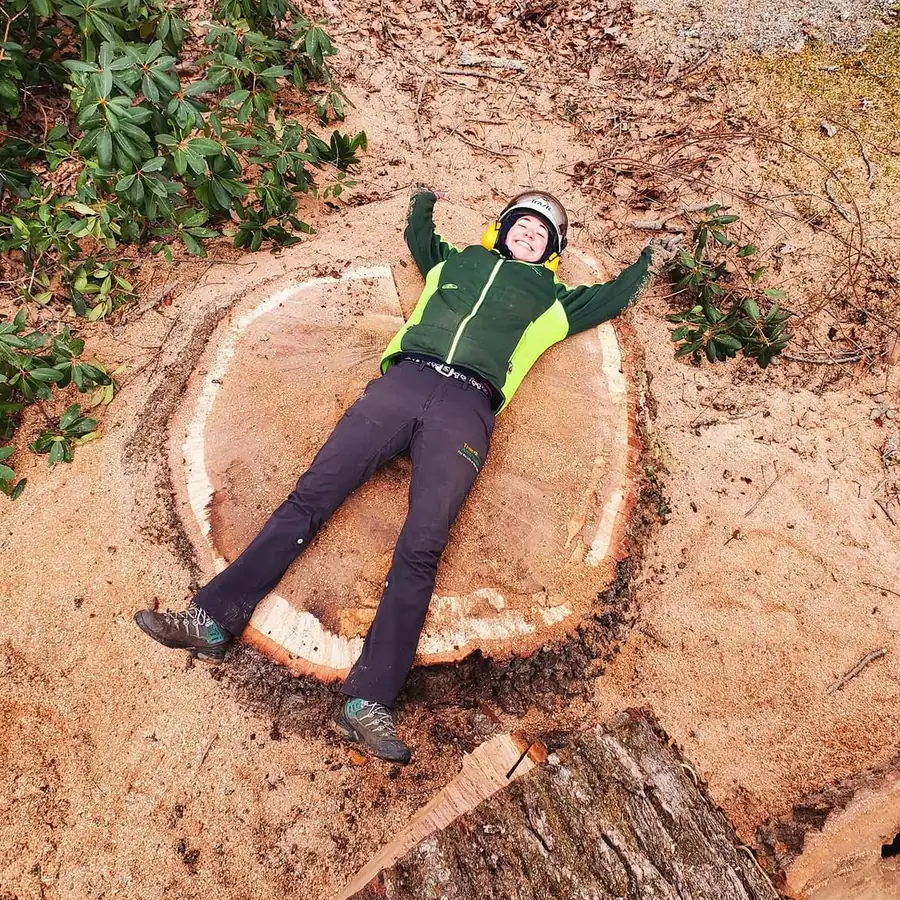
A handful of recent jobs, climbs, and canopy moments around Pittsgrove Township & nearby South Jersey towns.


Walk-through with Paul on a farmstead, a hedgerow run, or a hamlet lot. Written estimate within 48 hours. Or call (856) 241-0489 directly.
A senior arborist follows up within one business day.