For the life of your trees. · (856) 241-0489
TCIA AccreditedNJ LTE #408TRAQISA Member
ANSI Z133 · NJ LTE #408 · INSURED

Tree removal in South Jersey.

Crane-assisted · Sectional dismantle · Stump grinding · Cleanup

Removal performed only when assessment supports it. ANSI Z133-compliant crews. Crane-assisted on compromised trees, climbed dismantle on standard work, full cleanup and stump grinding. Removal is the last option, not the first.

30+
Years · NJ Practice
#408
NJ Licensed Tree Expert
TCIA
Accredited · 3× Renewed
TRAQ
ISA Risk-Assessment Qualified
88
South Jersey Towns
SERVICE OVERVIEW

Removal is a last resort.

Tree Awareness sells the assessment first. Most of the trees we’re asked to remove turn out to be salvageable through pruning, cabling, or a Plant Health Care plan. The honest call sometimes is removal — but only after the data supports it.

When removal IS the right answer, it’s a coordinated operation: ANSI Z133 safety standards, the right method matched to the site, full insurance coverage, and proper documentation if a structure was involved.

We handle residential properties, commercial sites, HOA contracts, and emergency storm work across Gloucester, Camden, Salem, and Cumberland counties.


Paul Biester evaluating a tree for potential removal
HOW WE TAKE IT DOWN

Three ways down. Two ways to finish.

Three removal methods, picked by the tree and what’s around it. Two stump options once it’s on the ground — surface grind or deeper for replanting.

METHOD 01

Conventional fell

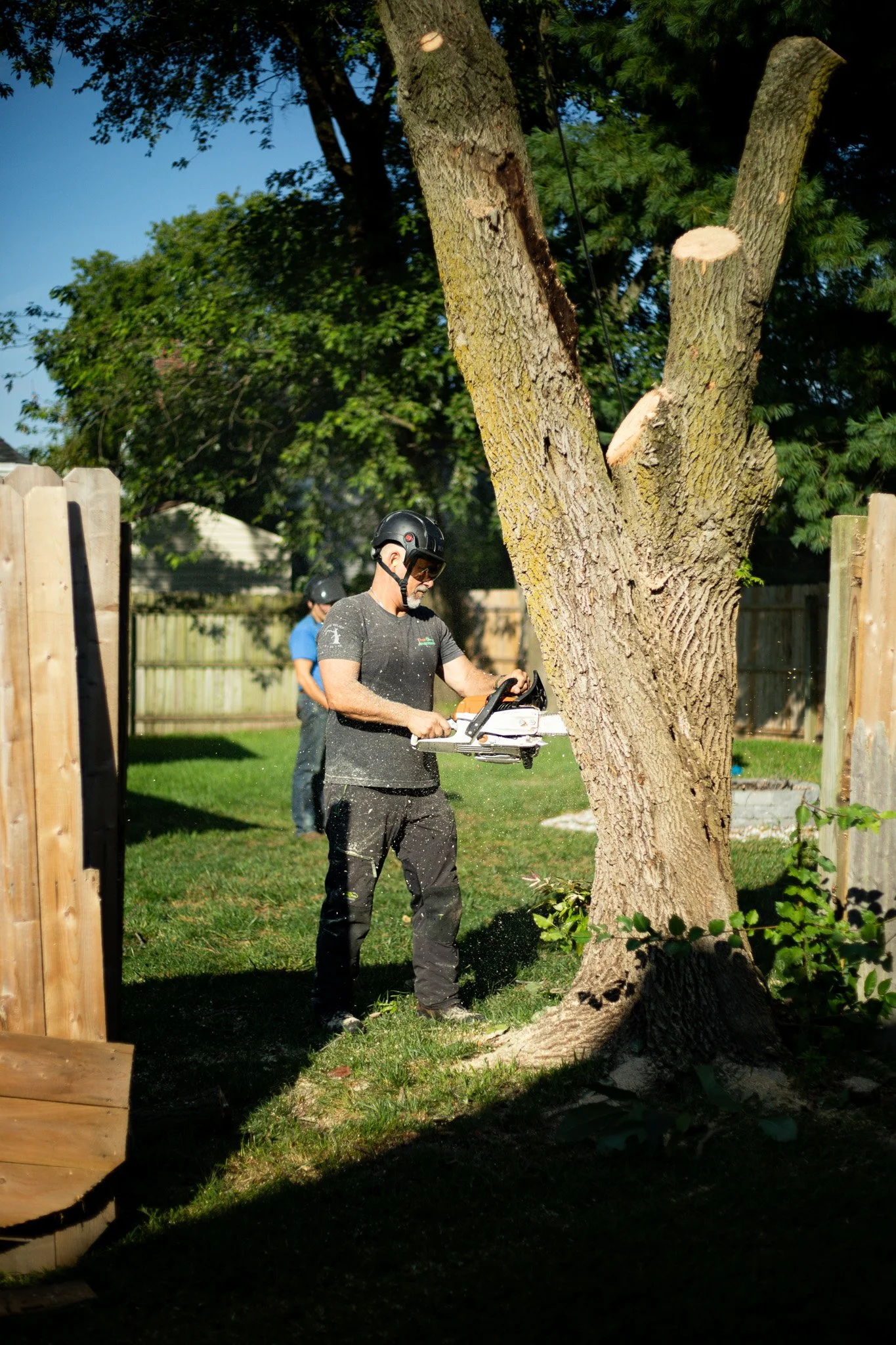
Standard rope and notch felling, used when the tree is structurally sound and there’s a clear drop zone with no targets. Fastest method — rare in residential South Jersey.

METHOD 02

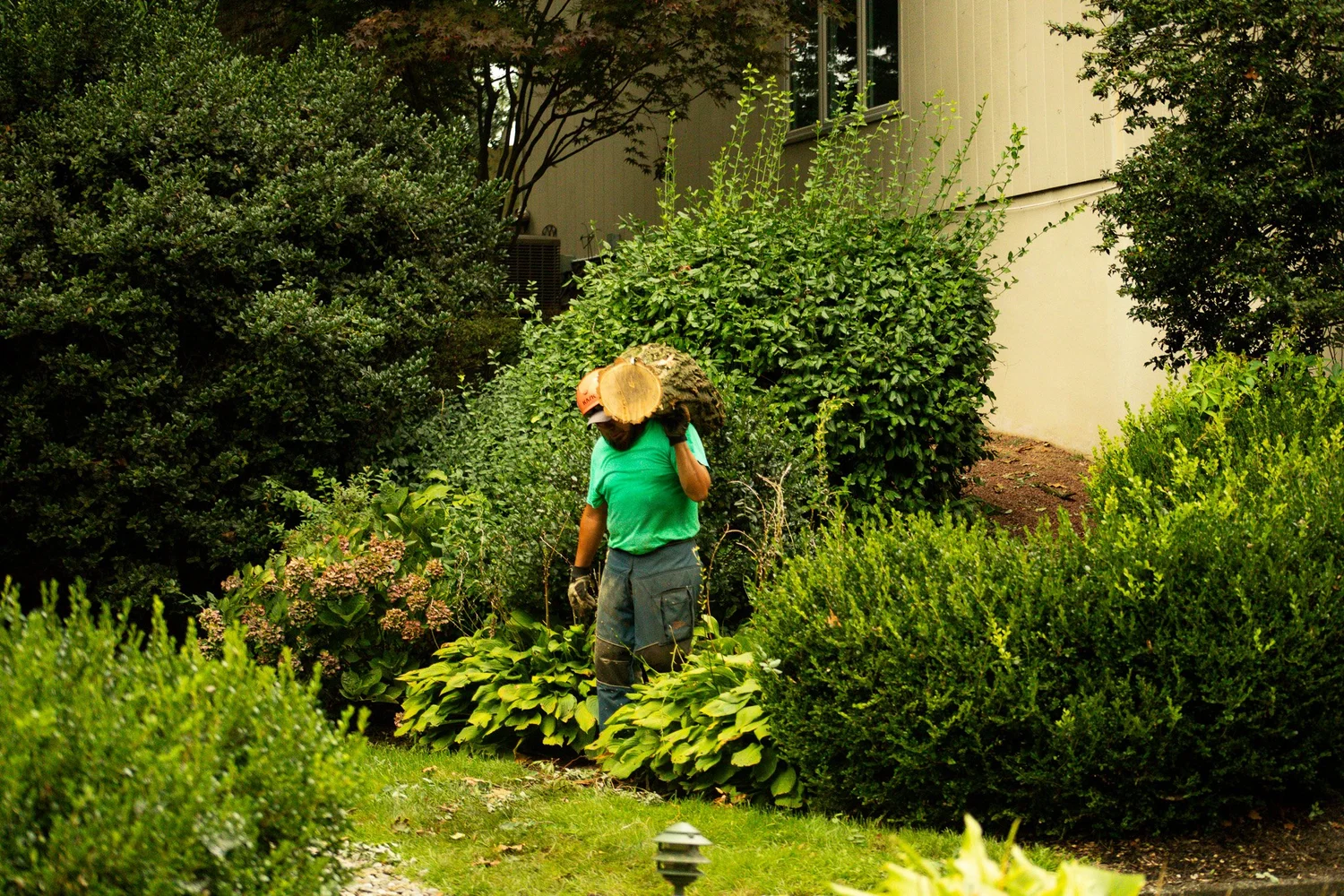
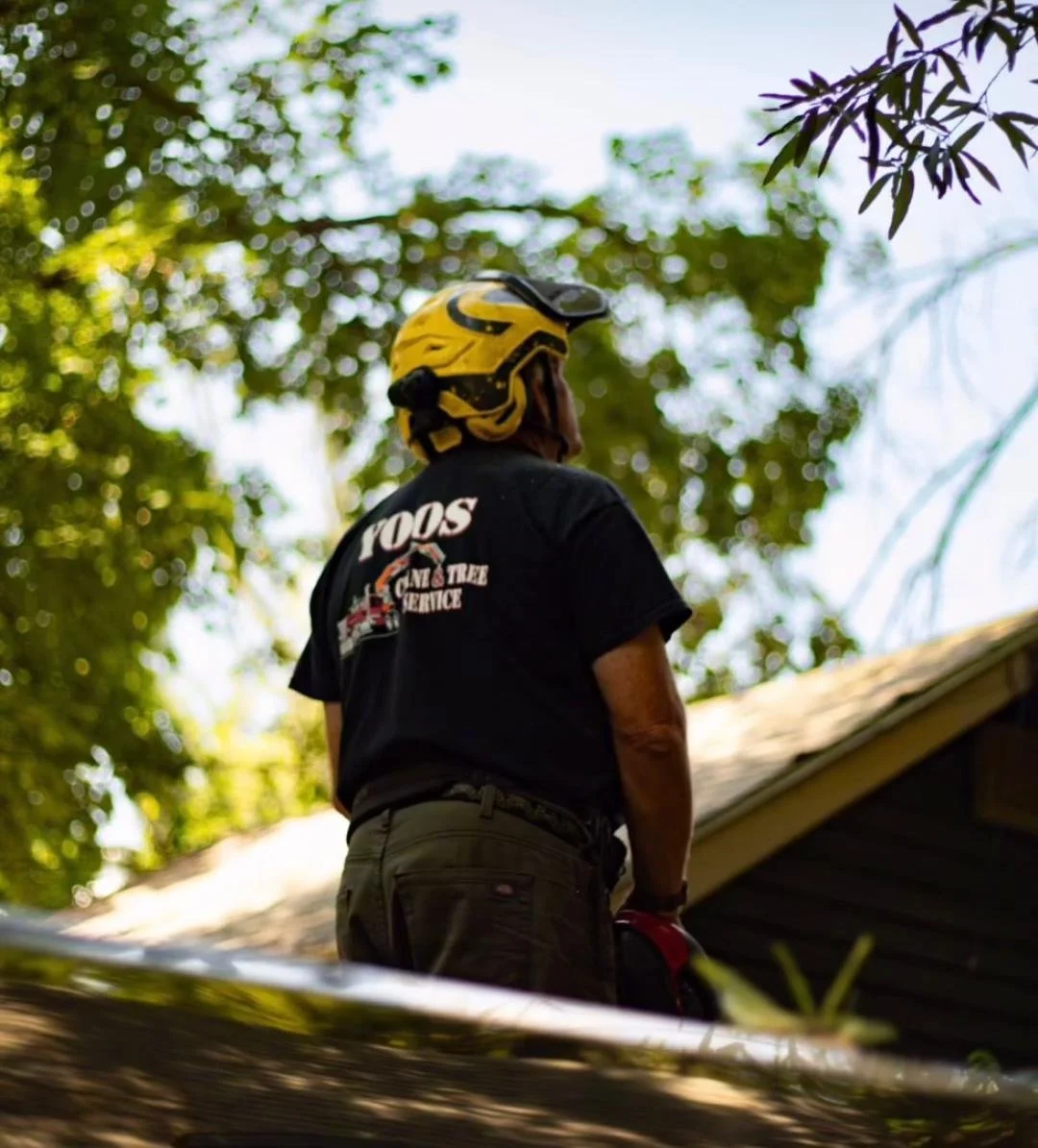
Climbed dismantle

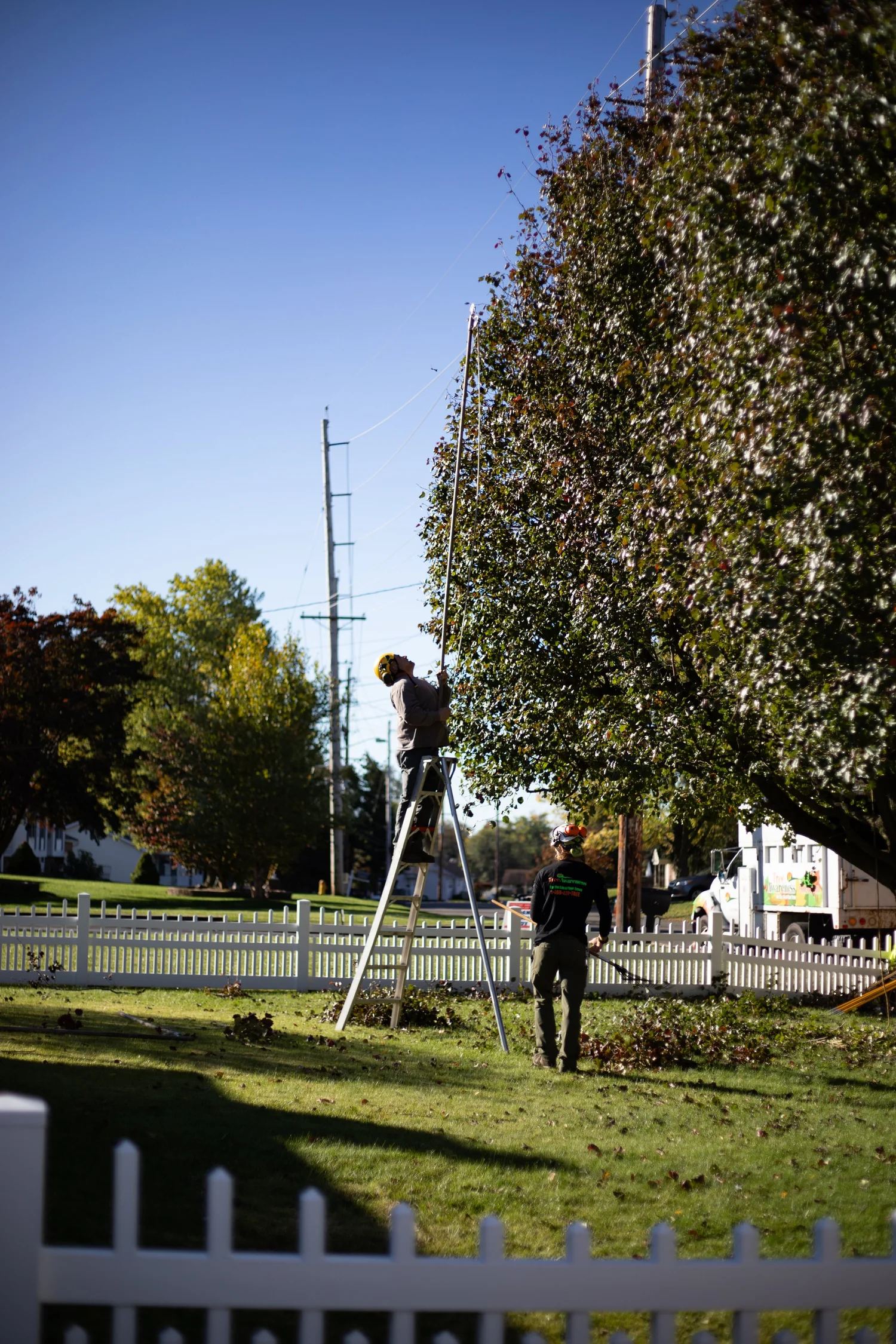
Climber ascends, sets rigging lines, and lowers cut sections piece-by-piece into the work zone. The standard for urban tree work where targets are present.

METHOD 03

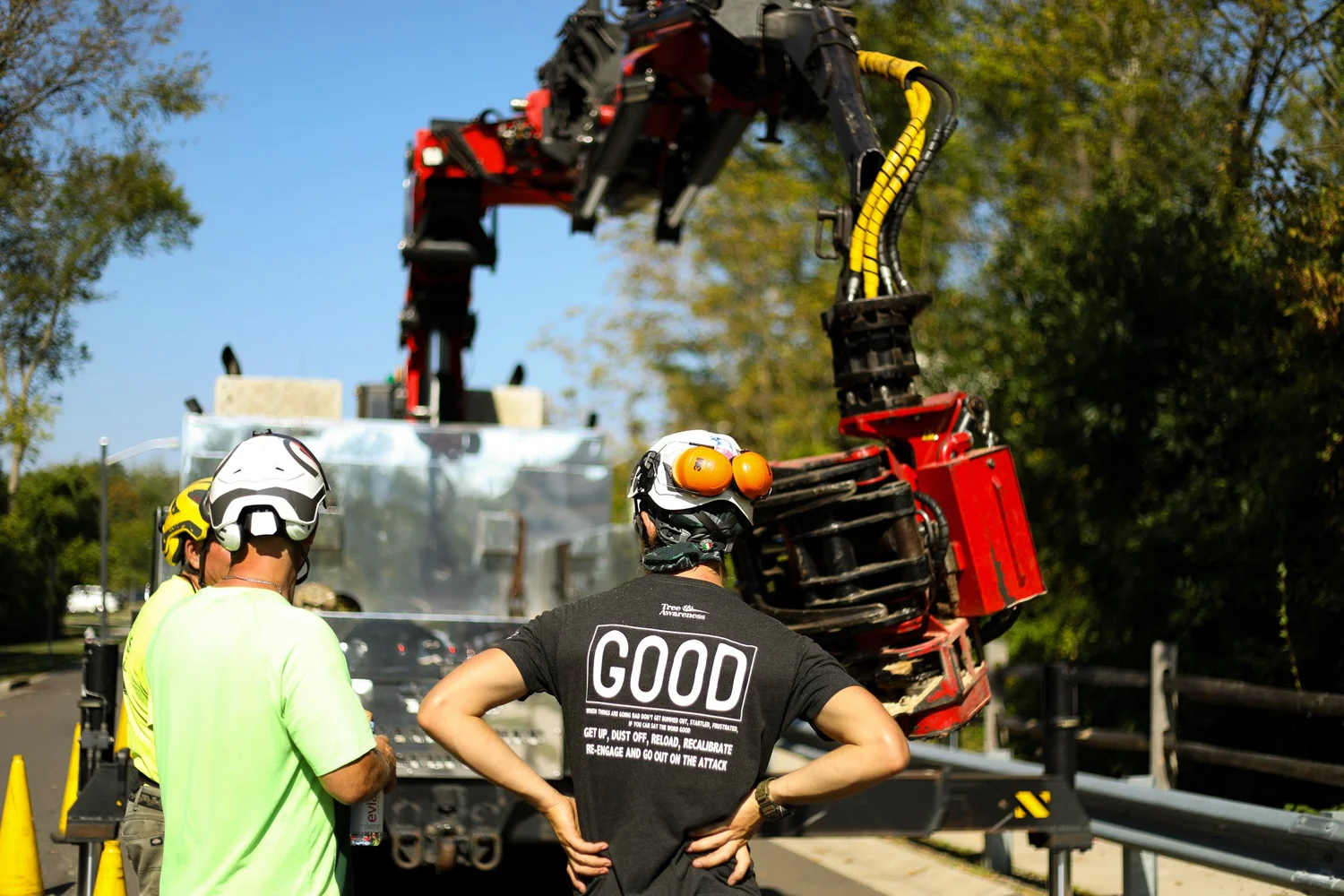
Crane-assisted

When the tree is too compromised to climb safely or in a position requiring sections to be lifted clear of the property. We coordinate with vetted crane operators.

METHOD 04

Stump grinding — surface

Ground just below the surface — the stump disappears, lawn restored, no signs left behind. Right when you want a clean finish but aren’t planting in the same spot.

METHOD 05

Stump grinding — grind to replant

Goes deeper, past the root crown — opens the spot so a new tree or plant can go in where the old one stood. Pick this when you’re replanting, not just removing.

WHAT TO EXPECT

From assessment to cleanup.

Removal estimate happens AFTER we’ve looked at the tree and confirmed removal is the right call.

01

Site assessment

We walk the tree and evaluate whether removal is actually warranted.

02

Written removal plan

Method, drop zones, target protection, cleanup scope — on paper.

03

Permits & coordination

NJ ordinance, Pinelands, road closures — we handle the permitting.

04

Removal day

ANSI Z133 crew, full insurance certificates, property protected before any cut.

05

Cleanup & replant

Wood removed same day. Stump grinding optional. Replant species recommendations.

RECENT WORK

Removals we’ve completed.

A snapshot of removal work across South Jersey — storm response, hazard trees, complex site work.

CASE STUDY · WOODBURY, NJ

A 55-ton crane and a closed road.

Lightning-struck poplar over Cooper Street in Woodbury. Public-safety hazard. Coordinated multi-trade removal.

Cooper Street, Woodbury, NJ · Tree Awareness

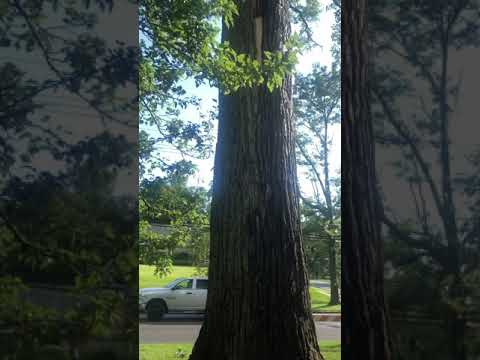
A lightning-damaged poplar over a public street in Woodbury — the kind of removal that requires permits, road closures, a 55-ton crane, and coordinated rigging.

Tree Awareness handled the assessment, the documentation, the permits, and the day-of coordination. The work was done in one day, with no incidents.

This is the difference between a tree service and a coordinated removal operation.

See the case study →
STANDARDS

What we do. And what we don’t.

Removal is a serious decision. Some industry practices we don’t participate in.

Standard practices

  • Assessment first — we evaluate whether removal is actually warranted
  • ANSI Z133 compliance — the safety standard for arboricultural operations
  • Written removal plan with method, target protection, cleanup scope
  • Full insurance certificates available before work begins
  • Permits handled by us when NJ ordinance, DEP, or road closures apply
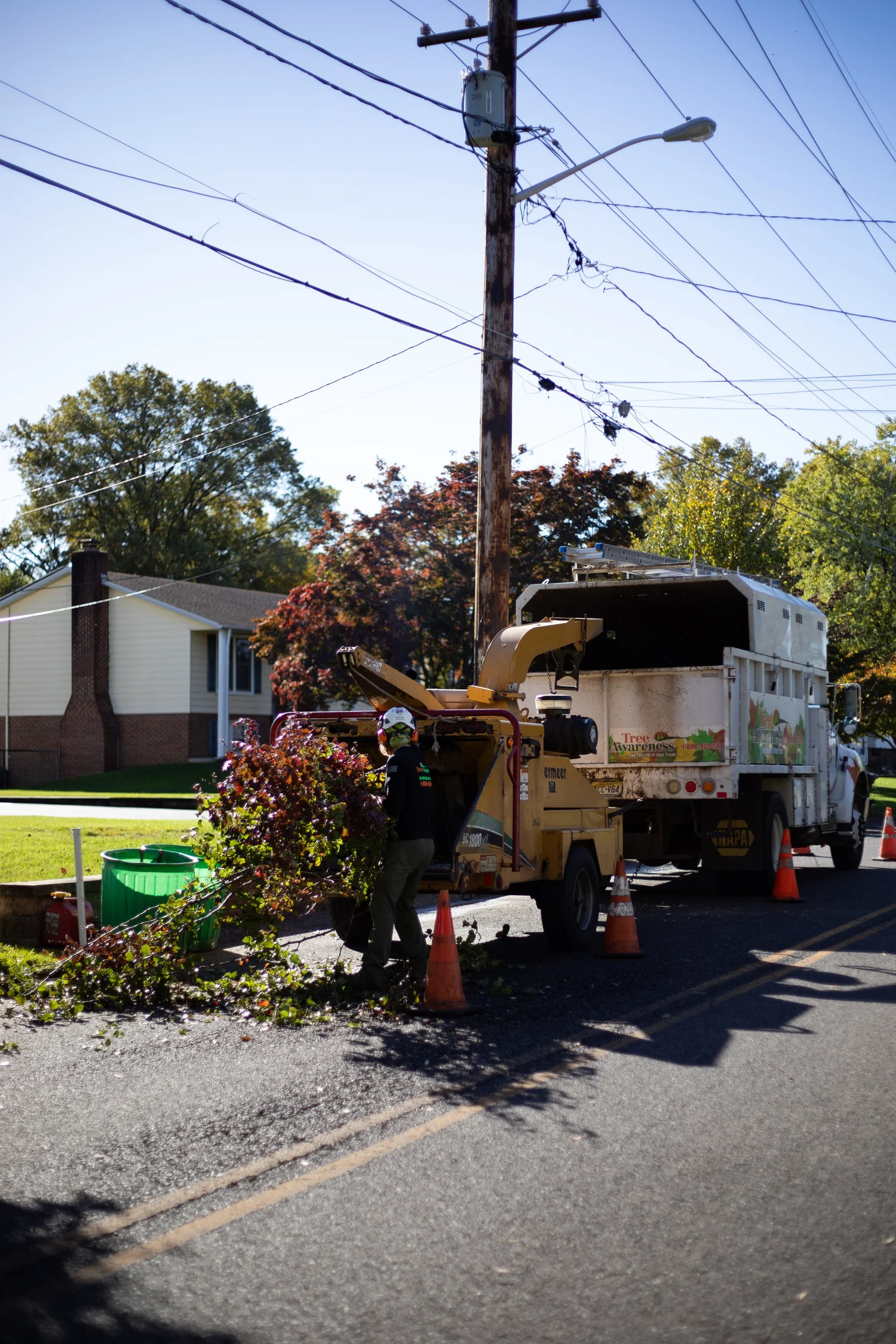
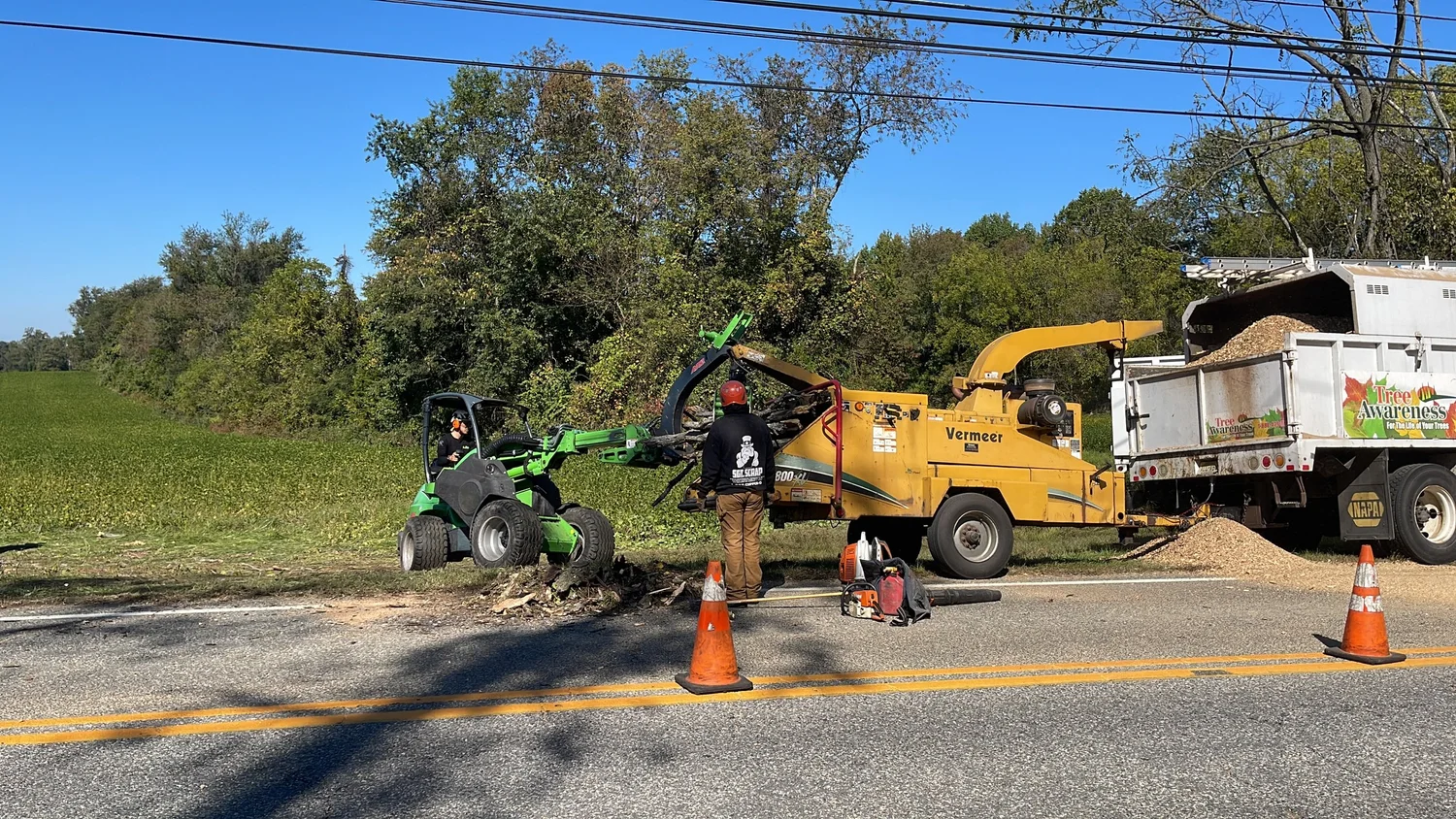
  • Same-day cleanup — wood and debris removed before crew leaves

Practices we don’t participate in

  • Selling removal when keeping the tree is realistic
  • Door-to-door storm chasing with high-pressure tactics
  • Wood-only motivation — pricing tied to firewood value
  • Uninsured crews — never. We carry GL + workers’ comp
  • Skipping permits on regulated trees or zones
  • Topping the tree first as a precursor to removal — pure liability
SERVICE AREA

Where we serve.

Tree Awareness covers 88 municipalities across Gloucester, Camden, Salem, and Cumberland counties.
See all 88 towns →
FAQ

Common questions.

When does a tree NEED to come down?

When the structural condition is irreversibly compromised AND the consequences of failure are unacceptable. Common triggers: severe trunk decay (verified by resistograph), significant root failure, 50%+ canopy dead/dying, or a tree in a target zone where keeping it standing is unsafe at any structural condition.

Can a damaged tree be saved instead?

Often yes. Storm-damaged or partially-failed trees can frequently be salvaged through cabling, bracing, and reduction pruning. We do TRAQ + resistograph assessment first to determine whether the structural condition supports keeping the tree on a monitoring plan.

Will tree removal harm my landscape?

We protect the work zone before any cut. Lawn, hardscape, fences, and adjacent plantings are protected with plywood, mats, and tarps. Any incidental damage gets repaired before we leave.

Do you handle stump grinding?

Yes. Stump grinding is quoted alongside the removal estimate. Two options: surface grind (just below the surface for a flush, clean-up finish), or grind to replant (goes deeper, past the root crown, so a new tree or plant can take its place).

Are permits required?

Sometimes. The 2025 NJ Tree Removal Ordinance regulates removals on certain properties. Pinelands Commission rules apply in regulated zones. NJ DEP riparian buffer protections apply along waterways. The permit is the homeowner's responsibility — your township issues it to you directly, not to the contractor. We’ll tell you whether your property needs one and what to put on the application.

How fast can you respond to a removal need?

For non-emergency work, typical lead time is 1–3 weeks. For storm response and emergency hazards, we triage same-day during business hours.

Are you insured?

Yes. Tree Awareness carries current general liability and workers’ compensation insurance. Certificates available on request before any work begins.

What does tree removal cost?

It depends on the size of the tree, accessibility, method (climbed vs. crane), nearby targets, and stump grinding. Small residential removals start around $400–$800. Mature heritage trees with crane work can run several thousand. Site visits and written estimates are free.

Do you require a deposit?+

Yes. A 30% deposit is collected when the client signs the agreement to schedule the work. The balance is due on completion.

FIELD NOTES · ON REMOVAL

Field notes on tree removal.

Documented case studies from removal work across South Jersey.

NJ LTE #408 · TCIA · ISA · TRAQ

Get a removal assessment.

Site visit and written assessment are free. We’ll tell you whether removal is the right call — and what the alternatives are.